ANTHROPOLOGY 452 FOLKLORE AND EXPRESSIVE CULTURES

ANTHROPOLOGY 452 FOLKLORE AND EXPRESSIVE CULTURESANTHROPOLOGY 452 FOLKLORE AND EXPRESSIVE CULTURESANTHROPOLOGY 452 FOLKLORE AND EXPRESSIVE CULTURES

ANTHROPOLOGY 452 FOLKLORE AND EXPRESSIVE CULTURES

ANTHROPOLOGY 452 FOLKLORE AND EXPRESSIVE CULTURESANTHROPOLOGY 452 FOLKLORE AND EXPRESSIVE CULTURESANTHROPOLOGY 452 FOLKLORE AND EXPRESSIVE CULTURES
More
  • Sign In
  • Create Account

  • Bookings
  • My Account
  • Signed in as:

  • filler@godaddy.com


  • Bookings
  • My Account
  • Sign out

Signed in as:

filler@godaddy.com

    Account


    • Bookings
    • My Account
    • Sign out


    • Sign In
    • Bookings
    • My Account

    Folklore of the black south
    Welcome to Black American Folklore

    Zora believed the people of the black south were a unique culture because they blended their memories of Africa with what they now knew here in America. It was important to Zora to study this because she knew it was unique and different from just being African or just being American. The people who had been freed here as slaves were making a new culture, language, traditions, and life for themselves. She wanted to share this with the world and for people to understand the special and uniqueness of this way of life and it's culture.

    Folklore of the Black South

    BARRACOON

    STORY TELLING

    BARRACOON

    Zora did an ethnography on many people in the south but in particular she spent much time with Cudjo Lewis in Alabama he was known as the last African that was brought over in the slave trade who remembered it.

    LANGUAGE

    STORY TELLING

    BARRACOON

     A mix of English and west African languages. The black south had created a dialect all its own. In Zoras writings she never wrote different then this dialect because she felt this was all part of understanding the folklore of the black south.

    STORY TELLING

    STORY TELLING

    STORY TELLING

    Story telling kept customs, culture and family history alive. Telling stories was a way of passing on history in Africa. The slaves kept this tradition, and it became a very important part of the black south.

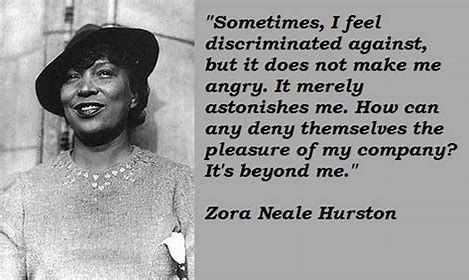
    About Zora Neale Hurston

    CULTURE

    SOUTHERN FOLKLORE

    CULTURE

    Zora wanted Black America to be free to express their culture. Folklore and religion became a way that African Americans found solace after their forced relocation.

    MUSIC

    SOUTHERN FOLKLORE

    CULTURE

    African American Folk Music preserved African history. The music told stories of the history. They also used a call and response form of music to spread information and news between to slaves on a plantation. This was called the field holler.

     https://youtu.be/rDYIDYJuhVo

    SOUTHERN FOLKLORE

    SOUTHERN FOLKLORE

    SOUTHERN FOLKLORE

    The picture above is a collogue of Six African folklore figures that survived coming across the Atlantic during the slave trade. There were many folktales in the African American south. They had made their way from Africa and continued to be passed down to generations here in the States.

    SOUTHERN BLACK CULTURE IN AMERICA

      1/4

      Cited Sources


      Zora Neale Hurston, April 1950. “What White Publishers Wont Print.” Negro Digest

      file:///C:/Users/13606/Downloads/Hurston-What-White-Publishers-Wont-Print.pdf


      Young, Jason R. 2022. “The Last African: Zora Neale Hurston and Making of Africa in America.” Palimpsest Journal Volume 11 Issue 2 page: 51-79  https://access.library.oregonstate.edu/pdf/1328756.pdf


      Dance, Daryl. 1979. “Following in Zora Neale Hurston’s “Dust Tracks.” Indian University Press Vol. 16, No. ½ 


      Hurston, Zora Neale. May 2018. Barracoon: The last story of the Last “Black Cargo”. Amistad Press

      New York Historical society web Life Story: Zora Neale Hurston (1891-1960) https://wams.nyhistory.org/confidence-and-crises/jazz-age/zora-neale-hurston/


       BOOK

      Living folklore : an introduction to the study of people and their traditions

      Sims, Martha C., 1963-; Stephens, Martine, 1959- 

      Contact Us

      Zora Neale Hurston

      Copyright © 2023 Zora Neale Hurston - All Rights Reserved.

      Powered by GoDaddy

      This website uses cookies.

      We use cookies to analyze website traffic and optimize your website experience. By accepting our use of cookies, your data will be aggregated with all other user data.

      Accept
